
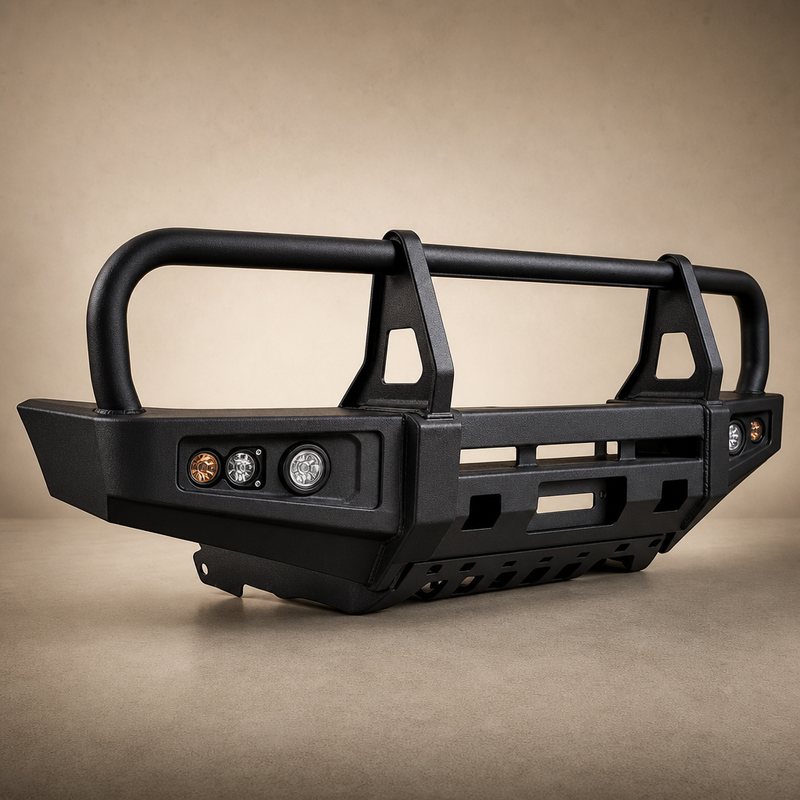
A bull bar is one of the first serious mods most tourers make, and one of the easiest to get wrong. It's not just a fashion statement bolted to the front of your rig — it's frontal protection, a recovery point, and a mounting platform for lights, aerials and a winch. Get it right and it earns its weight every trip. Get it wrong and you've added expensive mass exactly where you don't want it. Here's how to choose.
Steel vs alloy: the real trade-off
The eternal debate. Steel is stronger, takes a bigger animal strike, and is easier to repair or modify — you can weld a bracket on in the field. The cost is weight: a steel bar can add 60—80kg over the front axle, which affects handling, braking, tyre wear and fuel. Alloy is dramatically lighter, doesn't rust, and looks tidy, but it's harder to repair and generally absorbs less in a serious impact. For remote heavy touring where animal strikes are likely, most experienced tourers still lean steel. For lighter touring and weight-critical builds, quality alloy makes a lot of sense.
Airbag compatibility is non-negotiable
Any bar you fit to a modern vehicle must be airbag-compatible — engineered and tested so it doesn't interfere with your airbag deployment timing. This isn't optional and it isn't a marketing tick-box; it's a safety and, in many places, a legal requirement. Never fit a bar that isn't certified compatible for your specific vehicle.
Recovery points that are actually rated
A bull bar is a natural place for recovery, but only if it has rated recovery points — not a tab that looks strong. Recovery forces are enormous, and an unrated point that lets go turns a shackle into a projectile. Look for clearly rated points and use rated shackles or soft shackles to match.
Weight and where it sits
Every kilo on the front bar is a kilo added high and forward, exactly where it hurts handling most. Factor the bar into your overall weight budget alongside your winch, lights and everything else living up front. If you're adding a heavy steel bar and a winch, check your GVM and front axle rating — it adds up faster than people expect.
Mounting the extras
Think ahead about what the bar needs to carry: aerials, driving lights or a light bar, and a winch if you run one. A good bar has proper provision for all of it, tidy and secure, rather than you drilling and improvising later. If a winch is on the horizon, buy winch-compatible now.
The takeaway
Match the bar to how and where you actually drive. For remote, heavy, animal-strike country, certified steel with rated recovery points is hard to beat. For lighter touring and weight-sensitive builds, quality alloy is a smart call. Whatever you choose, insist on airbag compatibility and rated recovery points — everything else is preference. If you're unsure, tell us your vehicle and your typical trip and we'll point you straight.